

Selected Peter & Sons titles have gone live with Casino Plus, one of the Philippines’ leading online gaming platforms, pushing the studio’s catalogue into a broader Southeast Asian audience. It’s a useful moment to talk about new online slot providers generally, because a distribution deal like this tells you a studio is commercially credible, and almost nothing about whether its games are good value for you. Those are two different questions, and the second one you have to answer yourself.
What follows is the process I’d use, with the Peter & Sons news as the worked example rather than the verdict.
What the Casino Plus deal actually confirms about Peter & Sons slot games
The partnership makes a selection of Peter & Sons titles available to Casino Plus players in the Philippines. That is the substance of it. Casino Plus has built its position by designing around how local players actually use a platform day to day, with a strong mobile-first slant, and the Philippines is one of the region’s busiest online gaming environments, with players who move quickly between games and respond to titles that have a clear visual identity and memorable pacing.
Peter & Sons is an iGaming content provider known for a distinctive art style, and the Casino Plus launch follows other territory expansions, including an earlier Canadian push with TonyBet in Ontario and Alberta. Beyond that, be careful. Studio headcounts, founding dates, release totals and “award-winning” claims get repeated across aggregator sites without anyone checking them, so I’m not going to add any here.
Here’s the part most coverage glides past: an operator agreeing to carry a studio’s games is a commercial decision. It reflects content demand, commercial terms, certification in the right jurisdictions and whether the titles suit that platform’s players. It is not a quality rating, not a payout rating, and not an audit. Plenty of mediocre slots sit in the lobbies of excellent casinos.
Why studios keep pushing into the Asian online casino market
The Asian online casino market has a growing, heavily mobile player base and operators competing hard on content freshness, which gives emerging studios a route to real distribution that didn’t exist a few years ago. A lobby with four hundred slots needs new titles constantly, and operators will take content from smaller names to keep the shelf stocked.
For a player in India scouting providers, the practical effect is simple. You will meet unfamiliar studio logos far more often than you did a few years ago, sitting in the same lobby, in the same grid, as names with twenty-year track records. The lobby gives you no way to tell them apart. The vetting job has quietly moved onto you.
What actually makes a slot studio worth watching
Judge a studio on three things you can verify: the return to player figures it publishes, the volatility profiles across its portfolio, and whether its mechanics are genuinely varied or the same math model wearing different art. Everything else, including press releases like this one, is context.
RTP and volatility, explained simply
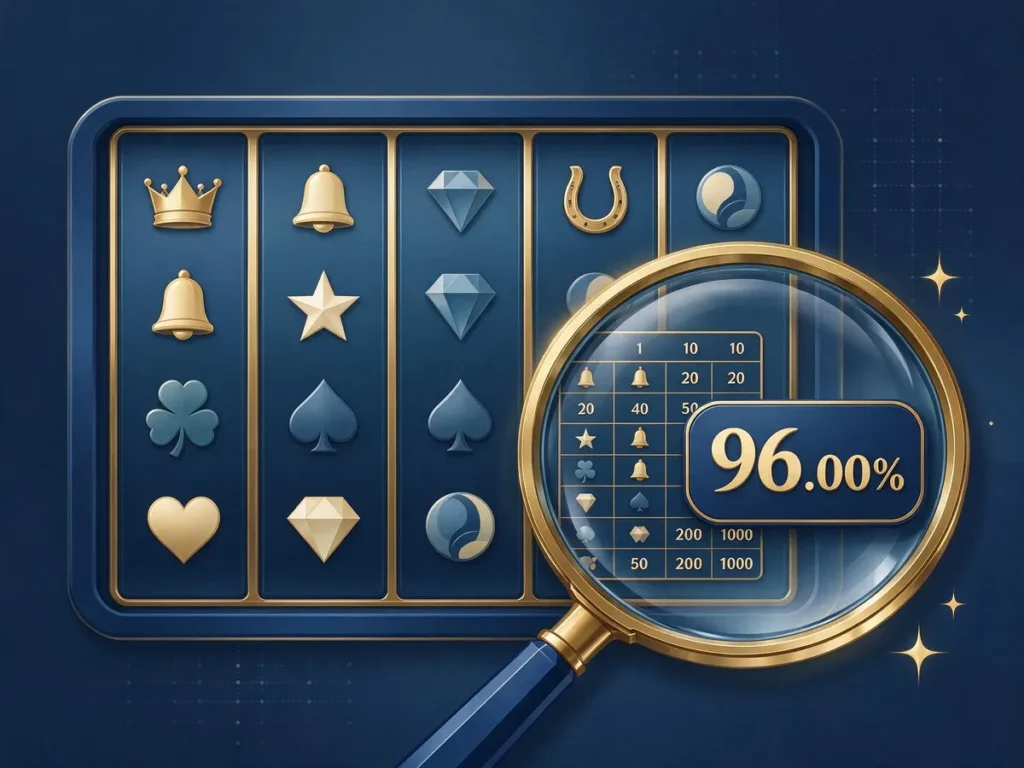
RTP is the share of all wagers a game returns to players over the long run, averaged across millions of rounds. A 96% RTP slot returns around ₹96 per ₹100 staked on average over that enormous sample, and keeps roughly ₹4 as house edge. Most slots sit between about 94% and 97%. Anything at 96% or above is at the friendlier end, 97%+ is genuinely good, and below 94% I’d skip on principle when the lobby offers better.
Two honest qualifications. First, the figure is a long-run average, not a session forecast, and no RTP removes the house edge. Second, and this matters more than the first: some providers supply a game in several RTP configurations and the operator chooses which to run. The percentage printed on a review site may not be the percentage in the game you just opened. Check the in-game information or paytable screen of the actual title at the actual casino.
Volatility describes how a game’s returns are distributed, not how large they are in total. High volatility means rarer but bigger wins, low volatility means frequent small ones. It does not change RTP at all. A 96% low-volatility slot and a 96% high-volatility slot return the same amount over the long run; they just feel completely different getting there.
| Volatility | Typical session pattern | Better suited to |
|---|---|---|
| Low | Frequent small wins, gentler swings, slower bankroll movement in both directions | Longer play on a small budget |
| Medium | A mix of modest wins and occasional larger hits | Most players, most of the time |
| High | Long dry stretches broken by rare large hits; most sessions end down | Short sessions by players who accept that pattern |
Pick volatility to match your budget and how long you want to play, not because high volatility sounds more exciting. A high-variance slot will chew through a small bankroll before the feature that justifies it ever arrives.
Theme and mechanic variety
A studio portfolio worth following shows range in its math, not just its artwork. Look at whether the catalogue includes different reel structures, cluster pays alongside paylines, varied bonus features, different hit frequencies. Open three titles from the same studio and if the base game behaves identically in all three, you’re looking at one slot math model reskinned.
Strong identity in art and pacing, which is what Casino Plus appears to be buying here, is a real commercial asset. It tells you players recognise the games. It tells you nothing about the paytable.
How to vet a new slot provider before you play
Run new slot releases through this before you stake anything. It takes about five minutes and it works for any unfamiliar name, Peter & Sons included.
- Check the game provider licensing. Suppliers need approval from the regulators governing the markets they serve, and the casino’s own licence should be stated clearly in its footer. An operator licence you cannot find is reason enough to stop.
- Find the published RTP inside the game. Open the information or paytable screen of the live title, not a review page, and read the figure there.
- Look for independent RNG certification. Testing houses such as GLI, eCOGRA and iTech Labs verify that random number generation and payout math match what the studio claims. Studios that have been tested usually say so.
- Play the demo first. Free-play mode shows you hit frequency and how often features actually trigger, which no marketing copy will tell you.
- Check distribution breadth. A studio whose games appear across multiple licensed operators has passed several compliance reviews, not just one.
- Read the rules for caps. Max win limits, feature-buy pricing and any bonus restrictions change the real value of a game far more than the theme does.
Where a studio like Peter & Sons fits among emerging providers
Treat Peter & Sons as a rising name earning distribution in competitive markets, which is what the Casino Plus launch demonstrates, and nothing more than that until you’ve checked the games yourself. I’d watch the studio. I wouldn’t tell you its slots pay well, because the available information doesn’t support that claim, and neither does the press release it came from.
That’s the habit worth keeping as more new online slot providers reach Indian-facing lobbies. Expansion news tells you who is growing. The paytable, the licence and the demo tell you what you’re actually playing. One of those is published by a marketing department.
Slots carry a permanent house edge by design, so play with money you’re comfortable losing, set deposit and session limits before you start rather than during a session, and use the cool-off or self-exclusion tools your casino provides if play stops feeling like entertainment. Online real-money gambling legality also varies by jurisdiction, and in India it differs between states, so confirm the rules where you live before depositing anywhere.